


PREVENT MOULD AND DAMP: 7 COMMON VENTILATION MISTAKES AT HOME | FAIRAIR
- Posted on
- By fairair
- Posted in Air quality, IAQ
- 0
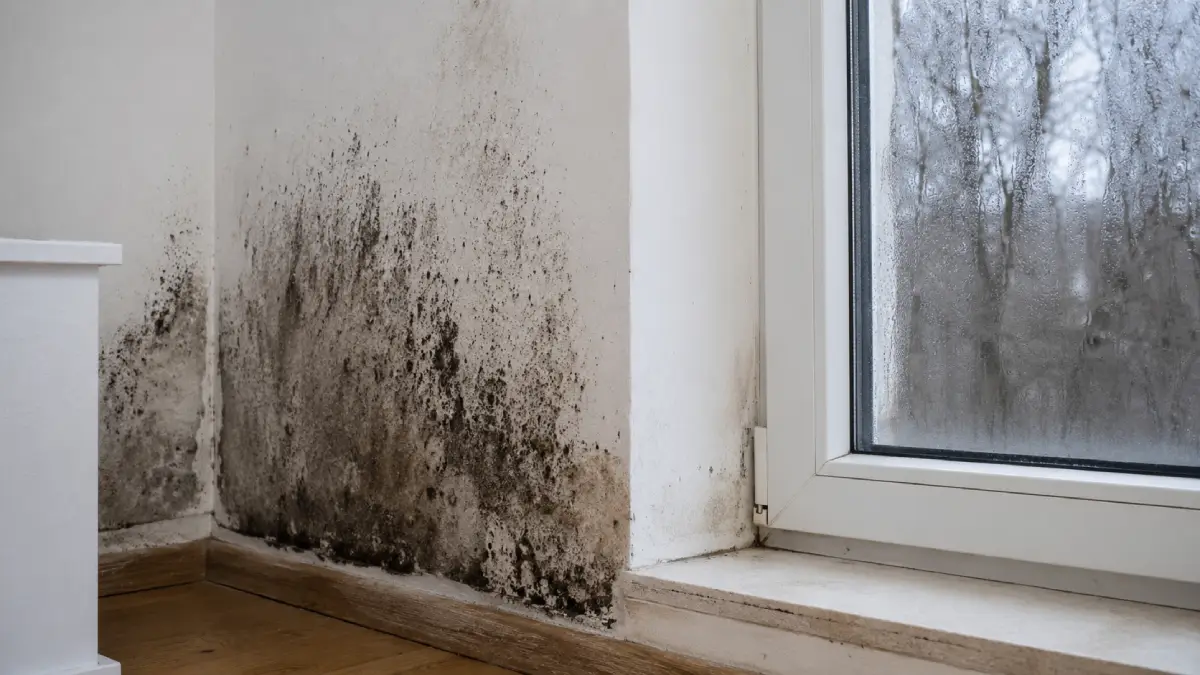
Want to prevent mould and damp at home? Discover 7 common ventilation mistakes and learn how to keep your home healthy and properly ventilated.
Prevent mould and damp: 7 common ventilation mistakes at home
A healthy home starts with good ventilation. Yet in many homes things still go wrong. Mould on walls, condensation on windows and stale indoor air are often not caused by one major mistake, but by a combination of small everyday habits.
At fairair, we see every day how important proper ventilation is for a healthy indoor climate. Especially in well-insulated homes, it is essential that polluted and moist air is continuously removed while fresh air is allowed to enter.
In this blog, we list the most common mistakes and explain what you can do to help prevent damp and mould in your home.
1. Only opening a window now and then
Many people think opening a window for ten minutes is enough. That may help to air out a room briefly, but it is not the same as proper ventilation. Air quality often deteriorates again quite quickly afterwards.
Proper ventilation should be continuous, 24 hours a day. Even when you are not at home and also while you are sleeping. Only then will damp and polluted air be continuously removed from the home.
2. Thinking one open window is enough
Good airflow usually requires more than one open window. In many homes, ventilation only works properly when air can move through the property from more than one side.
If you have trickle vents, small ventilation windows or natural air inlets, do not close them unnecessarily. Without airflow, moisture stays trapped inside and the risk of mould increases.
3. Turning off the ventilation system
A ventilation system is there for a reason. Still, some residents switch off mechanical ventilation or an MVHR system, for example because of noise, draughts or energy use.
That is usually not a good idea. The system should run continuously to remove stale air, moisture and CO2. In homes with mechanical ventilation or heat recovery ventilation, this is the foundation of a healthy indoor climate.
If you feel the system is noisy or not working properly, maintenance or inspection is usually much better than switching it off.
4. Handling moisture incorrectly when showering, cooking and drying laundry
Moisture is created every day in the home. Think of showering, cooking, cleaning, drying laundry and having several people indoors. At those moments, extra ventilation is important.
Increase the ventilation during and after showering or cooking. Keep the bathroom door closed while showering and dry the floor and walls afterwards as much as possible. Use the extractor hood while cooking and use lids on pans whenever possible.
It is best to dry laundry outdoors or in a well-ventilated room.
5. Keeping the home too cold
If the indoor temperature is too low, the risk of condensation and mould increases. Cold surfaces attract moisture. As a result, water vapour settles more quickly on walls, windows and in corners.
Heating your home regularly helps to keep it drier and healthier. If you reduce heating too much to save money, you may also increase the risk of damp problems.
6. Closing vents or blocking airflow gaps
Sometimes vents are closed to reduce draughts or keep heat inside. Gaps underneath internal doors are also sometimes blocked. That may seem logical, but it reduces air circulation indoors.
Ventilation grilles, air inlets and the gap under doors are often part of the ventilation design of a home. If you block them, the whole system works less effectively.
7. Not noticing poor air quality until it is too late
Poor ventilation is not always obvious right away. By the time mould becomes visible, the problem has often been there for a while. That is why it can be useful to monitor humidity and indoor air quality more closely.
A hygrometer can show whether humidity levels are getting too high. A CO2 meter can also help you understand whether ventilation and air renewal are sufficient, especially in bedrooms and living areas.
What if damp or mould keeps coming back?
Sometimes you do everything right and damp or mould still keeps returning. In that case, the cause is often deeper, for example a leak, a cold bridge, insufficient insulation, a poorly adjusted ventilation system, dirty or blocked filters, or overdue maintenance of the ventilation system.
In that situation, it is wise to look not only at daily habits, but also at the technical side of the home.
Good ventilation starts with proper maintenance
A ventilation system only works properly when it is properly maintained. Especially in homes with mechanical ventilation and MVHR systems, clean filters play an important role. Dirty filters restrict airflow and can lead to poorer ventilation, higher energy use and a less healthy indoor climate.
That is why it is important to replace filters on time and check the system regularly.
fairair tip
Want to help prevent damp, mould and unhealthy indoor air in your home? Make sure your ventilation system keeps running properly and replace your filters on time. Good ventilation is not a luxury, but a basic requirement for your health.
Comments
Be the first to comment...